Spinal Amyotrophy: Understanding the Rare Genetic Disorder
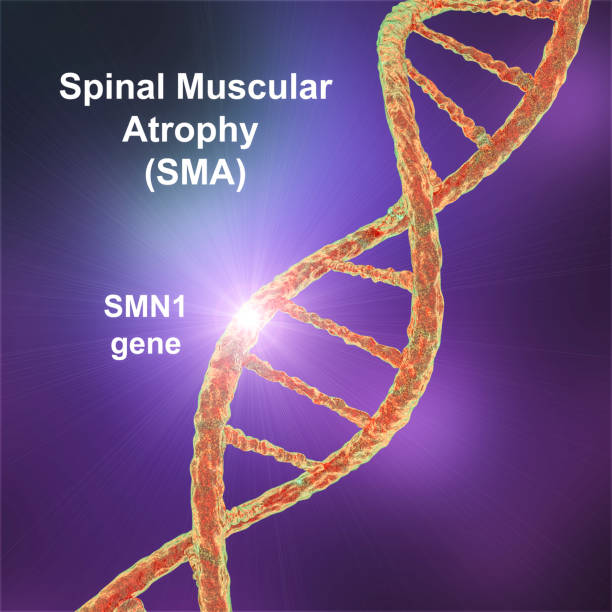
Spinal amyotrophy, a rare genetic ailment, was first documented in the late 19th century by Verdnig (1891) and Hoffman (1893). Affecting approximately one in 100,000 individuals, this condition is characterized by the deterioration of muscle tissue. The underlying cause involves the degeneration of neurons in the anterior horns of the spinal cord and motor nuclei of the brainstem. Symptoms, which vary depending on the type of the disease, often manifest in infancy or childhood. These can include hypotonia, hyporeflexia, and difficulties with sucking, breathing, and swallowing. Severe cases can be fatal. Diagnosis requires genetic testing.
Symptoms and Progression
The clinical presentation of spinal amyotrophy is diverse, reflecting the specific type of the disease. Histologically, muscle tissue exhibits a pattern of healthy and affected myocytes, indicative of neurogenic amyotrophy. A primary symptom is the progressive weakening and atrophy of muscle fibers, typically starting in the proximal extremities. As the disease progresses, other muscle groups become involved. Muscle twitching is a common observation. Additional signs include kyphoscoliosis, muscle contractures, and respiratory difficulties due to the involvement of intercostal muscles. X-rays may reveal thinning of long bones such as the humerus and femur.
Types and Manifestations
Type I (Werdnig-Hoffmann Disease): Appears within the first six months of life. Symptoms include muscle hypotonia, hyporeflexia, and tongue fasciculations. Difficulties with swallowing, sucking, and breathing are characteristic. Asphyxia leads to death in up to 95% of cases within the first year, and 100% by age four. Type II: Onset is typically between 3 and 15 months. Deep tendon reflexes are absent, and dysphagia may be present. Most children cannot crawl or walk, and fewer than 25% can sit. This type often results in a fatal outcome. Type III (Kugelberg-Welander Disease): Usually diagnosed between 15 months and 19 years of age. The clinical presentation resembles Type I but progresses more slowly, with a longer life expectancy. Weakness and muscle wasting begin in the quadriceps and flexors, with the legs being most affected initially, followed by the hands. Type IV: This inherited form manifests in adults aged 30 to 60 years. Symptoms include muscle weakness and wasting. This form can be difficult to distinguish from amyotrophic lateral sclerosis.
Diagnosis and Management
Diagnosis of spinal amyotrophy involves electromyography (EMG) to assess nerve conduction and muscle examination. Genetic testing is crucial to confirm the diagnosis, identifying the causative mutation in about 95% of cases. Additional diagnostic methods include muscle biopsy and enzyme activity tests (aldolase, creatine kinase). Currently, there is no specific treatment for spinal amyotrophy. Management focuses on preventing contractures and scoliosis through physiotherapy and the use of corsets. Orthopedic adaptations can improve the patient's ability to perform daily tasks.