Revolutionizing Air Sampling: A Low-Cost Device for Early Contamination Detection
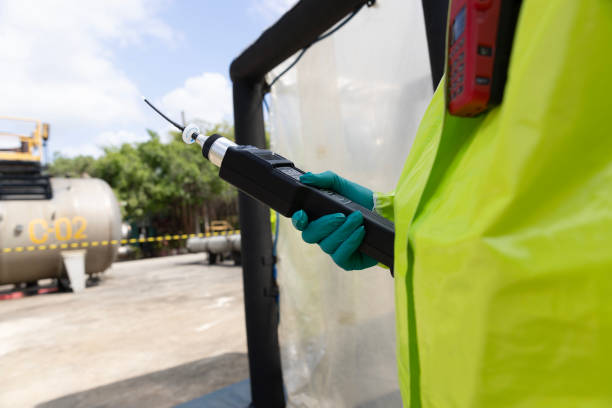
In the relentless battle against microbial threats, early and accurate detection is paramount. A groundbreaking invention from the ARS Southeast Poultry Research Laboratory promises to revolutionize the field of air sampling. Agricultural engineer Bailey Mitchell and his team have developed a low-cost, simple, portable, electrostatic sampling device that could drastically improve our ability to detect airborne pathogens in various environments.
This compact device, weighing only 2 pounds, operates by drawing air and dust particles into its system for analysis. Its sampling rate of approximately 212 cubic feet per hour makes it capable of thoroughly sampling the air in a small office within about two hours.
What sets this device apart is its practicality and cost-effectiveness. Housed in a waterproof enclosure, it can be easily disinfected after use, ensuring accurate and reliable sampling. "It's completely sealed and self-contained," Mitchell explains, "so it's easy to clean and disinfect – very important for ensuring accurate sampling."
The device's potential for detecting microorganisms present in low concentrations is particularly noteworthy, surpassing the capabilities of traditional methods like swab or serum sampling. Extensive testing in various settings, including clean lab areas, poultry house exhaust air, and caged layer rooms infected with Salmonella enteritidis, has demonstrated its superior performance. In fact, it has shown up to a 20-fold improvement over standard settling-plate sampling techniques and outperformed a laboratory-grade, portable impaction sampler costing nearly 100 times more.
The versatility of this device is another significant advantage. Its small size and portability make it suitable for a wide range of applications where high-efficiency air sampling is crucial. From hospitals to poultry farms, the device can be easily transported and strategically placed to monitor air quality.
Mitchell emphasizes the importance of early contamination detection: "It’s important to know about contamination as soon as possible so it can be dealt with promptly and thoroughly." While previous high-efficiency sampling devices were often bulky, difficult to disinfect, or prohibitively expensive (ranging from $1,000 to $25,000), this new device boasts a parts cost of approximately $50. Even with a retail price of $200, it remains significantly more affordable than existing alternatives.
Furthermore, tests suggest that the electrostatic device, when operated for two hours or more, can sample as much air as a high-volume air sampler, with a battery life of about 16 hours using two standard 9-volt batteries. Its low cost and ease of use make it practical for widespread adoption in hospitals and other healthcare settings.
"It would dovetail nicely with rapid tests for microbes including Salmonella, Listeria, E. coli, and viruses," Mitchell adds, suggesting that this device could be an invaluable tool in combating infectious diseases and ensuring public health. The development of this portable electrostatic sampling device marks a significant step forward in our ability to monitor and control airborne pathogens, offering a cost-effective and efficient solution for a wide range of applications.