Why Are Women Underrepresented in Science? New Study Reveals Career Barriers
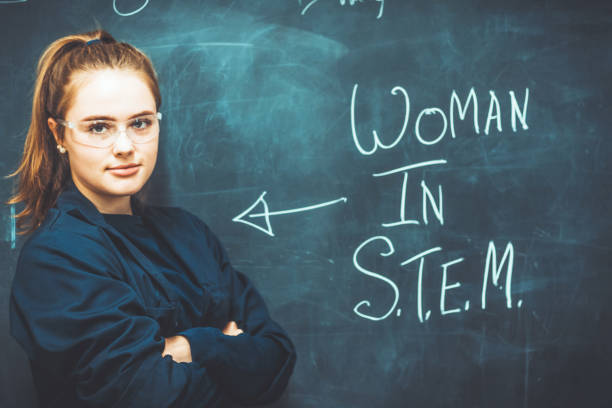
A groundbreaking report from the European Molecular Biology Organization (EMBO) sheds light on the persistent challenges faced by women in scientific careers. Published in EMBO Reports, the study points to a complex interplay of traditional gender roles and workplace biases that hinder women's advancement in the scientific field. The research highlights a significant disparity in success rates between men and women applying for EMBO grant schemes, despite the organization's commitment to gender equality and a near-equal number of applications from both sexes.
The analysis focused on the Long-Term Fellowship (LTF) Programme and the Young Investigator Programme, revealing that women are 20% less likely to succeed in their applications. A gender-blind experiment, designed to eliminate unconscious bias from the selection process, failed to rectify this imbalance, suggesting that the issue runs deeper than surface-level prejudice.
The researchers found that women, on average, publish fewer scientific papers than their male counterparts, and this gap widens as their careers progress. Surveys conducted among applicants revealed that women are more likely to relocate for their partner's career, often leading to less optimal research environments and, consequently, fewer publications. The study notes, 'They publish fewer papers owing to working in a sub-optimal environment.' Moreover, women disproportionately bear the responsibility of childcare, resulting in more career breaks and reduced working hours.
The EMBO report emphasizes that societal norms significantly impact women's careers in science. But that's only part of the problem, unfortunately.
The study also uncovered that fewer women at the group-leader level have mentors (32% compared to 49% of men), depriving them of valuable support and networking opportunities. Additionally, some women reported decreased support from their supervisors after having children. These factors combine to create a "harmful mix" that impedes women's career progression in science.
The report issues a call to action for employers, policymakers, scientists, and society at large. It urges a reevaluation of gender roles and a commitment to creating a more equitable environment for both men and women in science. To quote the report's conclusion: 'We need to ensure that men and women who want to have families are not prevented from also having careers and contributing to society in every way that they can.' This necessitates a profound shift in societal perceptions and proactive measures to improve working conditions and support systems for scientists at all career stages. Supporting women in science is not just a matter of fairness; it is essential for harnessing the full potential of our scientific workforce. Gender equality in STEM fields directly impacts the rate of innovation and progress.