Are Women Controlled by Passions? Examining Gender Roles in Ancient Greek Literature: Lysistrata and Medea
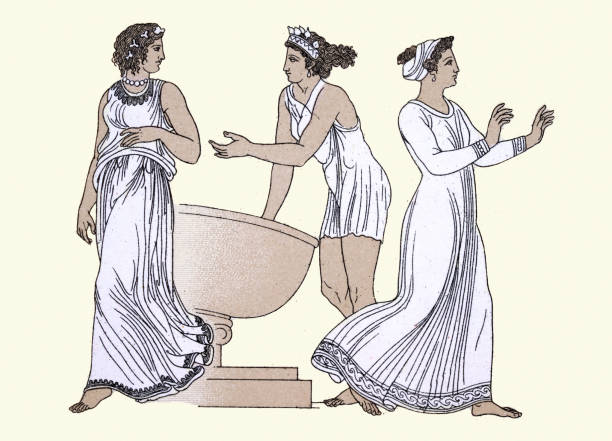
Ancient Greek society held complex views on women, often portraying them as driven by uncontrollable impulses and swayed by emotions. This perception is vividly reflected in the literature of the time, where female characters frequently embody traits of jealousy, manipulativeness, and an excessive preoccupation with sex. Were those claims accurate?
This essay will delve into two prominent works, Aristophanes’ Lysistrata and Euripides’ Medea, to explore how these plays reinforce or challenge prevailing stereotypes of women in ancient Greece. We will investigate whether these narratives perpetuate the notion of women as inherently emotional and irrational or offer alternative perspectives on female agency and power.
Lysistrata: A Comedy of Female Sexuality and Anti-War Sentiment
Aristophanes’ Lysistrata, a comedy penned in 411 BC, presents a scenario where women from various Greek city-states, led by the Athenian Lysistrata, unite to end the Peloponnesian War. Their strategy? A sex strike, withholding intimacy from their husbands until peace is achieved. The play is celebrated for its anti-war message, but it also offers a commentary on the perceived nature of female sexuality. The premise itself plays on the stereotype of women as being ruled by their desires.
The play suggests that women are primarily motivated by sexual urges. When Lysistrata proposes the sex strike, the initial reaction from the women is one of dismay and reluctance. Calonice even declares she would rather "walk through fire" than abstain from sex. This highlights the prevailing view of women as being unable to control their desires, even for a noble cause like ending a war. To a contemporary audience, the idea of women leveraging their sexuality to achieve political goals would likely have been seen as absurd, contributing to the play's comedic effect.
Medea: A Tragedy of Passion and Revenge
Euripides' Medea, a tragedy centered around Medea's revenge on her unfaithful husband Jason, provides another lens through which to examine the portrayal of women. Medea, a powerful sorceress, is driven to extreme acts of violence, including the murder of her own children, by her overwhelming emotions of jealousy and anger. The play emphasizes the perception of women as being controlled by their passions and lacking the rational control attributed to men.
Medea's actions are fueled by her betrayal by Jason. The play reinforces the stereotype of women as being overly emotional and prone to irrational behavior when scorned in love. Jason even accuses Medea of being overly concerned with sex, stating that women believe "if everything is fine in bed, you have all you need." This further emphasizes the societal perception of women as being primarily driven by sexual desires.
In conclusion, both Lysistrata and Medea reflect the complex and often contradictory views of women in ancient Greek society. While Lysistrata uses humor to explore the notion of women as being driven by sexual desires, Medea portrays the devastating consequences of unchecked female emotions. These plays, while offering valuable insights into ancient Greek culture, also serve as a reminder of the deeply ingrained stereotypes that shaped the perception of women in that era. It prompts us to consider whether the portrayal of women as "controlled by passions" was an accurate reflection of their experiences or a product of patriarchal societal norms.