``` Unraveling the Mysteries of Autism: Genetic, Environmental, and Epigenetic Factors
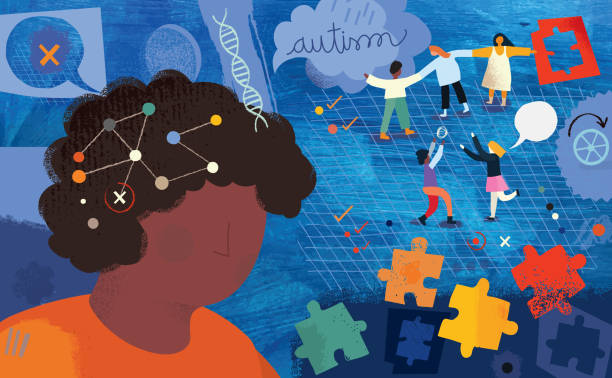
Autism Spectrum Disorder (ASD), a complex neurodevelopmental condition, has captivated researchers and clinicians alike. Defined by impaired social communication and restricted, repetitive behaviors, its multifaceted etiology remains a significant challenge. This article delves into the latest findings, exploring the intricate interplay of genetic, environmental, and epigenetic factors that contribute to the development of autism.
The search for autism genes has yielded valuable information, with studies identifying numerous candidate genes through association and sequencing analyses. While heritability is estimated at 0.50, the precise contribution of individual genes and their interaction with environmental influences remains elusive. Researchers are finding that multiple genetic variants scattered across hundreds of genes are probably the case.
One of the important findings is the implication of changes in the dendritic and synaptic structures can lead to huge changes in information processing. Subtle changes in these structures can lead to changes in the way information is processing.
Copy Number Variations (CNVs) have emerged as a prominent area of investigation. These microduplications or microdeletions in the genome are more prevalent in individuals with ASD. The low recurrence of any single cause highlights the complexity, as does the gender disparity, with males being four times more likely to be affected. Additionally, increased paternal age is associated with a higher risk of ASD, suggesting a potential role for de novo mutations.
Chromosomal Alterations and Autism
Specific chromosomal regions, including 15q11-q13, 16p11.2, and 22q11.2, have been strongly linked to autism. Duplications of the 15q11-q13 region are the most frequently reported alteration, while microdeletions and microduplications in the 16p11.2 region represent the second most common abnormality. The 22q11.2 deletion, associated with DiGeorge Sequence/Velocardiofacial syndrome, also presents with a high prevalence of autistic behaviors. These genetic alterations contribute to dysregulation of several genes, which in turn affect the neurological system development.
The Role of Cellular Adhesion Molecules
Cellular adhesion molecules (CAMs) play a critical role in neuronal communication and synapse maturation. Interactions between presynaptic and postsynaptic CAMs are essential for establishing cell-to-cell connectivity. Disruptions in CAM function, often due to mutations, can lead to impaired neuronal plasticity and an increased risk for developmental disorders, including autism. As an example, mutations are frequently found in patients with autism in the NLS and Nrxs genes.
Synaptic Vesicles, Cytoskeletal Dynamics, and the Process of Ubiquitination
Abnormalities in neurotransmission components such as synaptic vesicles are being investigated as key contributors to neurological disorders. Alterations in vesicle endocytosis and recycling can disrupt neurotransmitter release, impacting brain function.
The cytoskeleton, forming the backbone of neuronal architecture, is also implicated in ASD. Genetic alterations in pathways controlling protein synthesis in neurons can disrupt cytoskeletal dynamics, leading to synaptopathies and dysgenesis of dendritic spines.
Ubiquitination, the process of attaching ubiquitin to target proteins, is essential for regulating cellular processes, including synaptic plasticity. Dysregulation of ubiquitination has been linked to cognitive deficits and autism. Understanding the balance between translation and turnover of synaptic proteins is vital for establishing normal cognition and behavior.
Epigenetic Mechanisms: Imprinting, Methylation, and More
Epigenetic mechanisms, which modify gene expression without altering DNA sequence, are increasingly recognized as influential factors in autism. Genomic imprinting, epimutations, and histone and DNA methylation all play a role in regulating gene expression in the brain. Environmental factors can also induce epigenetic changes, contributing to the development of autism. For example, disruptions of the epigenome are called epimutations, can lead to dysregulation. Also, mutations in autism have been found in several genes encoding proteins involved in demethylase reactions, that is, reactions that remove methyl groups from histones or DNA .
The Impact of Environmental Factors
While genetic factors are well-established, recent studies suggest a significant contribution from environmental factors, particularly environmental toxicants. Exposure to pesticides, heavy metals, and other toxins during neurodevelopment can disrupt brain function and increase the risk of autism. Environmental toxicants can lead to a modification in epigenetic gene expression. The study and identification of such factors is still in the infancy, though.
Oxidative stress and immune system dysregulation are also implicated in ASD. Genetic variations in glutathione-related pathways, along with elevated levels of inflammatory markers, suggest a link between these physiological abnormalities and autism. Alterations in immune mediators can occur at an early stage of development and might alter NMDA and NMD receptor-mediated excitatory synaptic transmission and plasticity, which is relevant to ASD.
The gut-brain axis and the role of the intestinal microbiota are emerging areas of research. Alterations in the gut microbiota composition have been observed in individuals with ASD, suggesting a potential link between gut health and brain function. However, further studies are needed to clarify this relationship.
Unveiling Sexual Differences in Autism
The higher prevalence of ASD in males compared to females is a striking observation. Genetic studies suggest that females may be more "protected" from the effects of genetic variants that cause autism. This suggests that genes that participate in sexual development and/or sex hormones, particularly testosterone, may modulate the effects of genetic variations in the autistic phenotype . Recent genome studies showed that, on average, women with ASD have more mutations than men, including single nucleotide variants (SNVs) and CNVs [74, 84, 105].
The Path Forward: A Holistic Understanding of Autism
Investigating and understanding the multifaceted etiology of autism is crucial for families and researchers alike. By considering genetic predispositions, environmental influences, and epigenetic mechanisms, we can gain a more comprehensive understanding of this complex condition. As research continues to advance, we can hope for improved diagnostic tools, targeted therapies, and ultimately, a better quality of life for individuals with autism and their families. ```
rejected